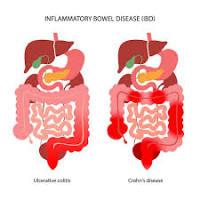
Inflammatory Bowel Disease (IBD)
USD Inflammatory Bowel Disease (IBD) onwards
IBD or Inflammatory bowel disease is the name for a group of disorders that cause inflammation of your digestive tract.
IBD is a result of your immune system attacking harmless viruses in your gut. If not treated in time, IBD can be fatal. There are two main types of IBD.
Crohn's Disease: While it can cause inflammation in any part of the digestive tract, it is most common in the tail end of the small intestine. It can spread through the layers of the digestive tract.
Ulcerative Colitis: It occurs in your large intestine and the rectum. Unlike Crohn's disease, the damaged areas are continuous and not patchy. It causes sores and ulcers in your colon (large intestine) and rectum. The colon is the innermost lining of your large intestine.
There is a very effective treatment for IBD in Ayurveda. It involves internal medications, diet changes, and lifestyle modifications.
Causes of IBD
We do not yet know what causes inflammatory bowel disease. Issues with the immune system are one possible reason.
The main job of our immune system is to fight the organisms that enter our body to cause diseases. A bacterial or viral infection can trigger an immune response in our body.
In this case, the immune system produces an excess of white blood cells. It then gets deposited in the lining of the intestine. Genes can also be a reason. Your chances of developing IBD are higher if your parents or siblings have it.
Symptoms of IBD
The signs of Inflammatory bowel disease vary based on the type and severity. The common ones are
Diarrhea
Stomach pain, cramping and bloating
Weight loss and anemia
Rectal bleeding
Fever and fatigue
Reduced appetite
Complications of IBD
Inflammatory bowel disease can lead to other complications as well. Some of the main ones are
Colon cancer- IBD increases the risk of you having colon cancer
Skin issues - Skin lesions are seen in people with IBD
Eye inflammations- Around 10 percent of people with IBD develop eye problems like uveitis
Blood clots - The risk of blood clots in arteries and veins are higher if you have IBD
Arthritis - In some cases, there can be swelling in the joints and even arthritis
Osteoporosis- More than 30% of those with IBD have a low bone density which increases the risk of Osteoporosis
Diagnosis of IBD
Your doctor will ask you to do a few tests. Some of these tests help the doctor to rule out other diseases. The tests include stool and blood tests, imaging tests, and endoscopic procedures.
Stool and blood tests can indicate the presence of infections and other diseases. Blood tests can also help the doctor determine the type of IBD (Crohn's disease or ulcerative colitis). Fecal occult blood tests will indicate if there is rectal bleeding.
Your doctor may ask for imaging tests or scans of your abdomen and anal area. Other tests include colonoscopy and endoscopy.
For colonoscopy, they will insert a tube fitted with a camera through your rectum. It allows the doctor to view the entire inside part of your colon.
For endoscopy, they will insert a tube through the mouth. It gives the doctor a complete view of the digestive tract as the tube passes through it.
Ayurvedic view of IBD
Ayurveda is a natural method of healing and cure. As per that, you are in perfect health when the three fundamental energy forces Vata, Pitta, and Kapha, are in balance.
It further states that proper digestion is key to good health. When your digestion is proper, the food that you eat gets converted into nutrients by the digestive fire (or Agni). These make your tissues healthy.
Lifestyle issues, lack of sleep, wrong food habits, etc. cause the digestive fire to worsen. It creates problems with digestion, and the food gets converted into toxins or Ama. This Ama gets deposited on the walls of the intestine and other areas in the digestive tract.
Further, it also affects the Kapha dosha and the internal hydration within the organs. It leads to the elimination of mucus from the intestine, which then gets passed out through the stool.
Pitta also gets impacted very soon. When all these changes go on for a long time, it causes structural changes to the digestive tract, mainly the intestines.
Ayurvedic treatment for IBD
Ayurvedic treatment for IBD involves medications, diet changes, and lifestyle modifications. The medicines stimulate the appetite, digest the Ama or toxins, and heal the ulcers. There will be formulations to control the bowel movement and thus to control diarrhea.
The main treatment methods include the following.
Virechana, or induced purging, which helps in Vata to move normally without blocks.
Vasthi, which is medicated enema, helps in treating the ulcers and inflammations in the colon and rectum.
Vamana, or induced vomiting, is very useful if the disease is in the early stage.
Your doctor will decide on the right treatment based on the type of IBD and the severity of the disease. For this, the doctor will need to see you in person first. The typical treatment is for around 21-28 days. You will need to stay in the hospital for this period.
Along with the treatment, your doctor will also advise on diet changes and lifestyle modifications. These are important to ensure that the condition does not worsen again after the treatment.
Other treatment options for IBD
Changes in lifestyle, medicines, and surgery are the other main treatment options for IBD.
Medicine to reduce the inflammations is the first line of treatment here. However, some of these have side effects that you need to be aware of before taking them. Other medicines include pain killers, vitamin and iron supplements, and anti-diarrheal drugs.
Vitamin supplements reduce the risk of some side effects. Iron supplements help in dealing with anemia if there is bleeding.
How to prevent IBD
While we cannot prevent IBD, there are some steps that you can take, which will reduce your risk of developing it. These are
Quit smoking. If you are a smoker, it is entirely in your control to stop it. Smoking is a major risk factor, and stopping it helps a lot.
Be active- Regular physical activities can be of great help in preventing IBD.
Drink 2-4 liters of water a day
Have a healthy diet and remove junk foods from your diet