Room Options

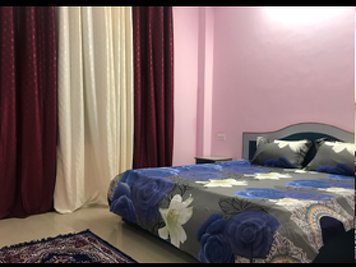
Private Room
Wi-Fi/ Internet, Double Bed, Western-Style Bathroon
Shared Room
Double Bed, Single Bed, Telephone

Private Room
Wi-Fi/ Internet, Double Bed, Western-Style Bathroon
About
100-hour Yoga Course Beginner Level Yoga Courses in Rishikesh,
India
Om Shanti Om Yoga School as the leading yoga school in Rishikesh, India offers you the shortest Yoga Teacher Training Course of 100 hours.
We will provide you residential yogic practice and an opportunity to become RYT-200 (Registered Yoga Teacher with Yoga Alliance USA).
Yoga is the science of proper living and as such is intended to be incorporated in daily life. Yoga is the conventional culture of the Hindu religion.
The word yoga originates from the Sanskrit word yuj, which means the union of the individual consciousness and soul with the universal consciousness or spirit.
Some people choose yoga because it helps them in their career or profession.
For other, yoga is just an exercise, a way of keeping the body fit, leading a healthy life, doing sports or even a holiday or vacation. But some may even search yoga with a lot of questions in mind. The real learners are those who research the divinity of yoga, encountering self-finding liberation and changing the destination of their life.
"The course is well designed for Beginners in Yogic field."
Cost Includes
MEDITATIVE POSTURES
STANDING POSTURES
BALANCING POSTURES
INVERTED POSTURES
TWISTING POSTURES
FORWARD BEND POSTURES
BACK BEND POSTURES
DYNAMIC POSTURES
RELAXING POSTURES
is a Sanskrit word meaning "extension of the praa or breath" or "extension of the life force". The word is composed of two Sanskrit words: prana, life force, or noted particularly as the breath), and ayma, to extend or draw out. (Not "restrain, or control" as is often translated from yam instead of ayama). It is a yogic discipline with origins in ancient India. Pranayama is traditionally viewed as a practice involving a lot more than just breathing for relaxation. It is a term having a broad range of meanings and connotations Pranayama is the foundation for our body because it refreshes our breathing system and makes fit our respiratory system. It is a term having a broad range of meanings and connotations. The sage Patanjali, in yoga sutras, defines pranayama as regulation of incoming and outgoing breath coupled with retention.
Introduction of Pranayama
Some regard meditation is the mental concentration on something; others consider that we meditate when we imagine something that gives us peace or satisfaction. All these methods are being with one goal to slow down and, eventually, completely stop the incessant activity of our minds. These exercises are not really meditation they are substitutes for meditation because it is normally very difficult to stop your mind altogether. In reality, meditation is a state of thoughtless awareness.
The real meaning of meditation is transforming our mind. By engaging in a particular meditation practice you learn the patterns and habits of your mind, and the practice offers a means to cultivate new, more positive ways of being. With regular work and patience, these nourishing, focused states of mind can deepen into profoundly, peaceful and energized states of mind.
Introduction of Meditation
The word mantra has two parts; man, which is the root of the Sanskrit word for the mind; and tra, which is the root of the word instrument, means an instrument of the mind, a powerful sound or vibration that you can use to enter a deep state of meditation. A combination of certain codified sounds is a mantra.
The correct chanting of mantras under the guidance of Siddha (Guru) brings about the manifestation of thoughts & desires, and even of devs & devis. It is originated from Ved, which was written by Lord Brahma. The teachings of the Vedas consist of various mantric chants or hymns cognized by different seers or rishis from the cosmic mind. The body gets an effect from mantras.
It keeps away from all the diseases and negative energy.
Mantras: It stimulates and balances all the systems of the Human body. Keertan: Mahadev Sambho | Hare Rama Hare | Krishna Jai Gurudev | Jai Ma Kali | Jai Ma Durga divider Yoga Philosophy The main philosophy of yoga is simple: mind, body and spirit are all one and cannot be clearly separated. Yet there is a multitude of philosophical ideas developed by looking into the deeper dimensions of the body, mind and spirit.
Yoga is a set of spiritual practices but in itself is not an institutionalized religion, per se. Hinduism is related to yoga through a common recognition of the Vedas as an authoritative source, and both Buddhism and Jainism share many of the core values of the yoga tradition. But classical yoga is best understood as a system of spiritual practice, rather than a particular religion.
Introduction of Yoga
There are hand mudra, body mudra, facial mudra thus Hand Mudra is most famous. When the Mudras is practiced at the highest level, it leads to awakening the Prana, Chakra, Kundalini which can bestow specific powers. Mudra manipulates Prana and eventually our Nadi and Chakra.
Introduction of Mudra
Bandha It is a term for the body locks in Hatha yoga, treated under the heading of mudra. Specific Bandhas are; Mula Bandha, contraction of the perineum, Uddiyana Bandha, contraction of the abdomen into the rib cage, Jalandhara Bandha, tucking the chin close to the chest, Maha Bandha, combining all three of the above Bandhas. Among these, I will give you a short description of the few important ones. You can select that which suits you well and practice regularly. A Cough, asthma, enlargement of spleen and liver, sex-sublimation, venereal diseases, consumption, chronic constipation, leprosy and all sorts of incurable diseases are also cured.
Introduction of Bandha
Ayurveda or Ayurvedic medicine is a system of traditional Hindu medicine native to the Indian subcontinent. Contemporary practices derived from Ayurvedic traditions are a type of alternative medicine. Ayurveda is a discipline of the upaveda or "auxiliary knowledge" in Vedic tradition. The origins of Ayurveda are also found in the Atharvaveda, which contains 114 hymns and incantations described as magical cures for disease. Since then Ayurveda has stood for the wholesome physical, mental and spiritual growth of humanity around the world. Today, it's a unique, indispensable branch of medicine, a complete naturalistic system that depends on the diagnosis of your body's humours - vata, pitta and kapha - to achieve the right balance.
Introduction of Ayurveda
Yoga Anatomy is a study of the Subtle currents of energy that moves through the layers of three bodies. The Ancient yogi held the view that we actually have three bodies; Physical, Astral and Causal. Asana practice is a way of imposing order on the human system and use the poses in a proper alignment. We don't live to do Yoga but we do yoga in a proper way and proper sequencing so that we may live a healthy life. Basically, Yoga Anatomy comprises of breathing excercises, muscular and skeletal adjustment as well as correcting improper body alignment. Yoga Anatomy is a valuable resource that allows you to see each movement in an entirely new light. This approach will lead you logically through a wealth of musculoskeletal anatomy, bring the academic discourse to life, and permit you to understand the body's architecture and work with its safety.
Respiratory Systems
Shatkarmas Kriya most commonly refers to a "completed action", technique or practice within a yoga discipline meant to achieve a specific result. Another meaning of kriya is an outward physical manifestation of awakened Kundalini, such as a spontaneous body movement related to kundalini energy flow. Kriya Shakti is "a power of thought", said to be greatly studied by yogis. The Purity of body encourages purity of the mind. Yoga has developed six cleansing techniques or shat kriyas for purification of the physical body. Through these simple exercises, nature is assisted in the elimination of waste products and mucus. Many mental and physical ailments may be alleviated through the practice of kriyas.
Introduction of Shatkarma
Master Cleaning: Shankha Prakshalana
About the Center
As part of their course, students are taken to two Yoga retreats, to any specific places in Rishikesh such as historical, spiritual and knowledgeable places on Sundays. The center provides Ashram-based rooms with comfortable bed, study table, hot water bathroom, views close to nature, walking distance to shopping and groceries or restaurants. There are several spiritual places or temples nearby.